
Hefei Grand Nets Co., Ltd.
Call Us: +86 15605607108
E-mail: sugrand@grandnets.com
WhatsApp:+86 15605607108

- All
- Product Name
- Product Keyword
- Product Model
- Product Summary
- Product Description
- Multi Field Search
Views: 0 Author: SUGRAND Publish Time: 2026-05-08 Origin: Site
For B2B buyers, whether you are a greenhouse supplier, agricultural product distributor, or nursery operator—bulk purchasing of shade nets requires consideration of the following points: shading rate, material, weaving process, color, and supplier capabilities.
This article, drawing on over 17 years of export experience and past customer purchasing needs, will answer the 5 most frequently asked questions before purchasing shade nets.
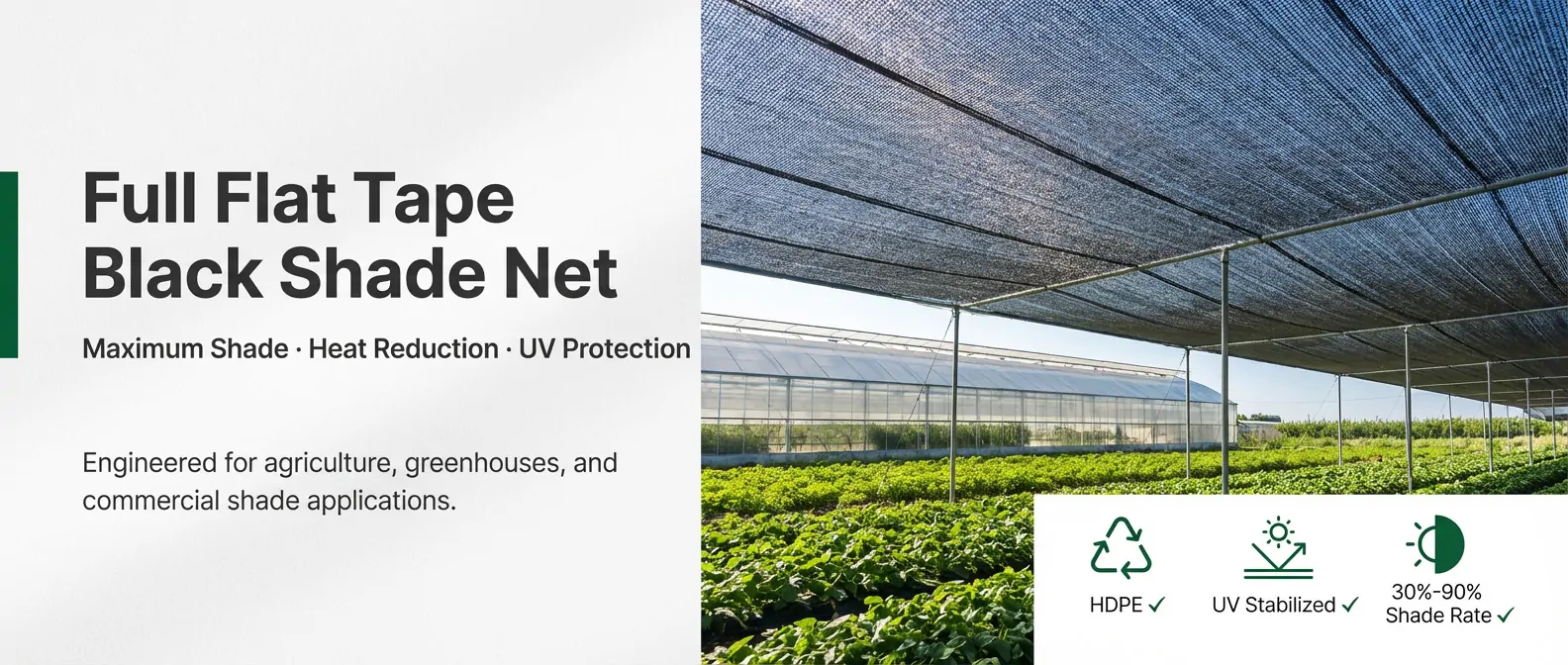
The shading rate determines how much sunlight can pass through the shade net. Different crops have different light requirements, so when wholesalers purchase shade nets in bulk, they first need to consider choosing the appropriate shading rate.
SUGRAND will clearly list the required shading rates for different crops in a table for easy reference.
Shade Rate | Best For |
30-50% | Vegetable crops, flowers, greenhouses |
50-70% | Nurseries, plant propagation, ornamental plants |
70-90% | Livestock shelters, shade-loving plants, seedlings |
90-95% | Outdoor seating, parking shades, warehouses |
SUGRAND Tip: Experienced wholesalers typically purchase shade nets with varying shading rates to meet the needs of different customers, with shading nets with shading rates of 50%-70% being the most commonly purchased.
Every buyer asks: How long will this shade net last? The material composition directly answers this question.
Most high-quality shade nets are made of high-density polyethylene (HDPE) with added UV stabilizers. However, not all HDPE is of the same quality; it's generally categorized into virgin and recycled materials.
Virgin HDPE: Shade nets made from virgin HDPE with 3%-5% added UV inhibitors can last 5-8 years, and even longer if properly stored.
Recycled Materials: Shade nets made from recycled composite materials have extremely low UV resistance and typically become brittle and unusable after 12-24 months.
Many buyers often overlook the weaving process of shade net. Shade nets are mainly made in two ways: knitted and woven.
Knitted Shade Net (Raschel Knit): These use a ring structure, are elastic, lightweight, breathable, and tear-resistant. Local damage does not affect the overall quality, making them ideal for greenhouse applications.
Woven (Tape) Shade Net: These are woven from flat, single-ribbed threads, providing even shading and excellent wind resistance, making them more suitable for outdoor applications (such as livestock sheds or construction sites).
We all know that shade nets come in many colors, and while this may seem like a minor detail, it can significantly impact crop growth. The core effect of shade net color is its influence on light intensity and temperature control, which in turn affects crop photosynthesis and yield.
Below is a guide for B2B buyers choosing shade net colors.
Colors | Shade Rate | Suitable Crops / Scenarios | Core Advantages |
Black | 50%–95% | Shade preferred, strong summer shading, general use | Strongest cooling effect, inexpensive, durable |
Silver Gray | 40%–65% | Eggplant, melons, greenhouses, insect control | Good light transmission, insect control, can provide full-day shading |
Green | 40%–60% | Flowers, nurseries, tourism | Aesthetically pleasing, promotes thicker leaves, good plant shape |
White | 25%–45% | Strong seedlings, hot weather, supplemental lighting | High reflectivity, good cooling effect, prevents etiolation |
Blue | 40%–60% | Seedlings, succulents, growth control | Promotes sturdy growth and thicker stems |
Red | 40%–60% | Leafy vegetables, tea, promotes growth | Increases yield, larger leaves, earlier flowering |
Coffee | 50%–85% | High temperatures and strong sunlight, alternative to black | UV resistant, durable, good cooling effect |
Before purchasing shade nets in bulk, in addition to understanding the product, it's crucial to understand the supplier. You can assess a supplier's strength by considering the following:
✅Certifications: Reputable suppliers typically hold ISO9001 quality management system certification, and their products should have SGS and CE test reports.
✅UV Test Reports: After understanding the importance of UV stabilizers for the lifespan of shade nets, you should request relevant test reports from the supplier before placing a bulk order.
✅Factory Visit: We recommend visiting the factory in person. If an in-person visit is inconvenient, we suggest scheduling an online tour to directly experience the factory's production capabilities.
✅Sample Testing: If it's not a long-term supplier, we recommend requesting samples for testing before placing an order to avoid the hassle of receiving non-compliant goods.
Q1: Which Shade Netting Rate Should I Prioritize?
A: 50-70% shade netting is the most versatile and suitable for nurseries, greenhouses, and many agricultural applications.
Q2: How Long is The Lifespan of Shade Netting?
A: High-quality shade netting with added UV protection can last 5-8 years under strong sunlight. Low-quality shade netting may become unusable within 18-24 months.
Q3: Can I Customize The Size and Color?
A: Yes. SUGRAND, as a B2B supplier with 17+ years of experience, offers ODM & OEM customization services for bulk orders.
Q4: Which Certifications Should I Check?
A: Prioritize checking ISO 9001, CE, and SGS UV stability and tensile strength test reports.
Q5: How Can I Verify The Supplier's Quality Before Placing An Order?
A: Request samples for testing, review third-party test reports, and, if permissible, visit the factory.
If you have any questions about purchasing shade nets, please contact SUGRAND. We will provide you with one-on-one answers and customized solutions.
Email: sugrand@grandnets.com
WhatsApp/WeChat: 86 15605607108
Address: 15th Floor, B Tower, Jin Zhong Huan Mansion, Hefei, China


